The Right to Work
OUR CAMPAIGN
The right to work campaign objective is to “Enabling Palestinian refugees in Lebanon of practicing their right to work and to be treated equally with Lebanese”. Palestinian refugees in Lebanon have no access to official jobs due to their refugee status, exclusion from Lebanese labor law, from obtaining work permit and from Lebanese reciprocity law.
Despite their longstanding presence in Lebanon, Palestinian refugees remain excluded from key aspects of social, political and economic life in the country. They are neglected and deprived access to any human rights, including access to work and maintaining regular jobs. An improvement of the living conditions of Palestinians is needed along with exempting them from the labor laws and procedures that has thus far restricted their access to jobs.
Palestinians in Lebanon, have over the years, become more dependent on services and assistance provide by UNRWA, that are threatened to be stopped, along with other local and international NGOs.
During the first half of 2005, in a participatory approach and with the involvement of more than 100 local NGOs and stakeholders, as well as community initiatives working among Palestinian and Lebanese Communities, AN has launched the “Right to Work Campaign – RtWC”. Cooperation between all national and local initiatives advocating for Palestinians right to work, own propitiates, easing access of Palestinians to work, etc. are in the sole of the RtWC approach and activities.
Background Information
According to UNRWA figures, the number of Palestinian refugees is 425,000. They are mostly the descendants of those who forced fleeing violence from Palestine in 1948. More than half of the refugee population (62%) lives in camps as compared to 38% living in gatherings, mainly in camp vicinity. Two thirds of Palestine refugees are poor, which equates to an estimated 160,000 individuals. The poverty rate is higher in camps than in gatherings, nearly three quarters of camp residents are poor while slightly more than half of gathering residents are poor.
Palestinians in Lebanon are classified as foreigners by the Lebanese laws and procedures– despite the fact that many were born in Lebanon and have lived there for more than sixty years – and they face systematic discrimination. They are barred from working in almost all of liberal professions, forcing skilled people to take menial and low wages. Unemployment rates are high, trapping most refugees in poverty.
Palestinian Refugees in Lebanon (PRL) suffer from (a) ambiguous legal status and absence of protection; and (b) violations of their right to work, own property, adequate housing, health, fair trial, freedom of association, opinion and expression and freedom of movement, accommodation and travel. Over the last 67 years, the ambiguous legal status and absence of protection for PRL has direly affected their wellbeing. Furthermore, numerous legal restrictions have hindered the enjoyment of their civil and socio-economic rights.
Working Areas
Coalition and Coordination
Palestinian – Lebanese coalition represent a large number of civil society throughout coordination and central committees in all areas and the in Palestinian camps.
Mobilization Activities
- Conducting wide range of grass-roots and policy mobilization
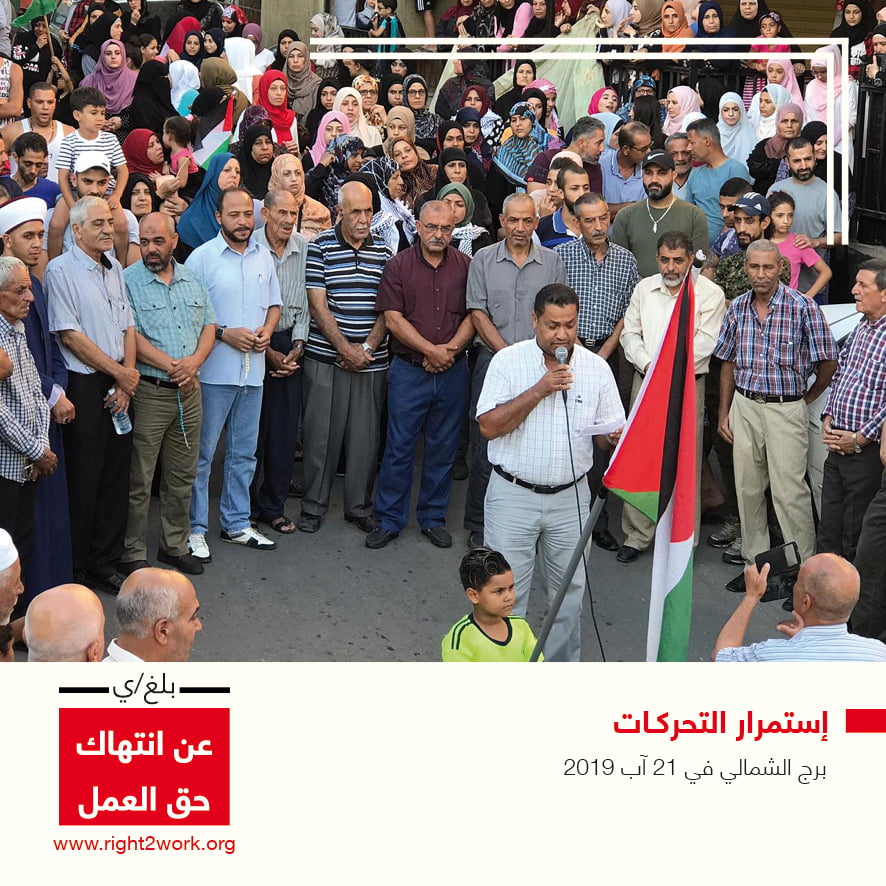
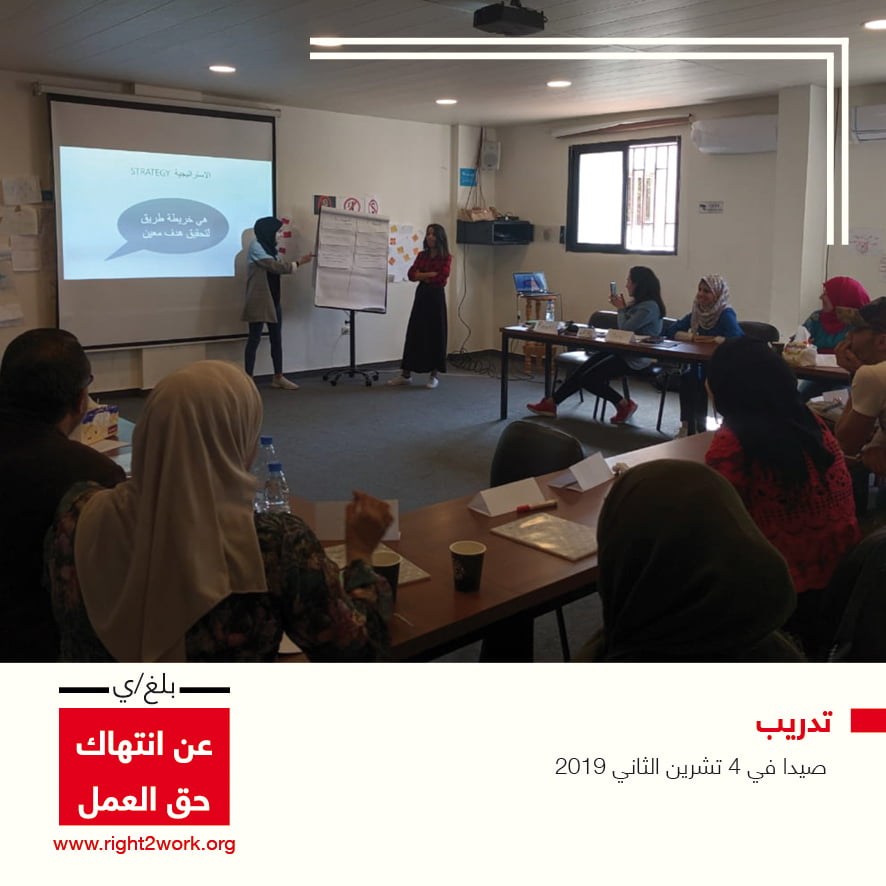
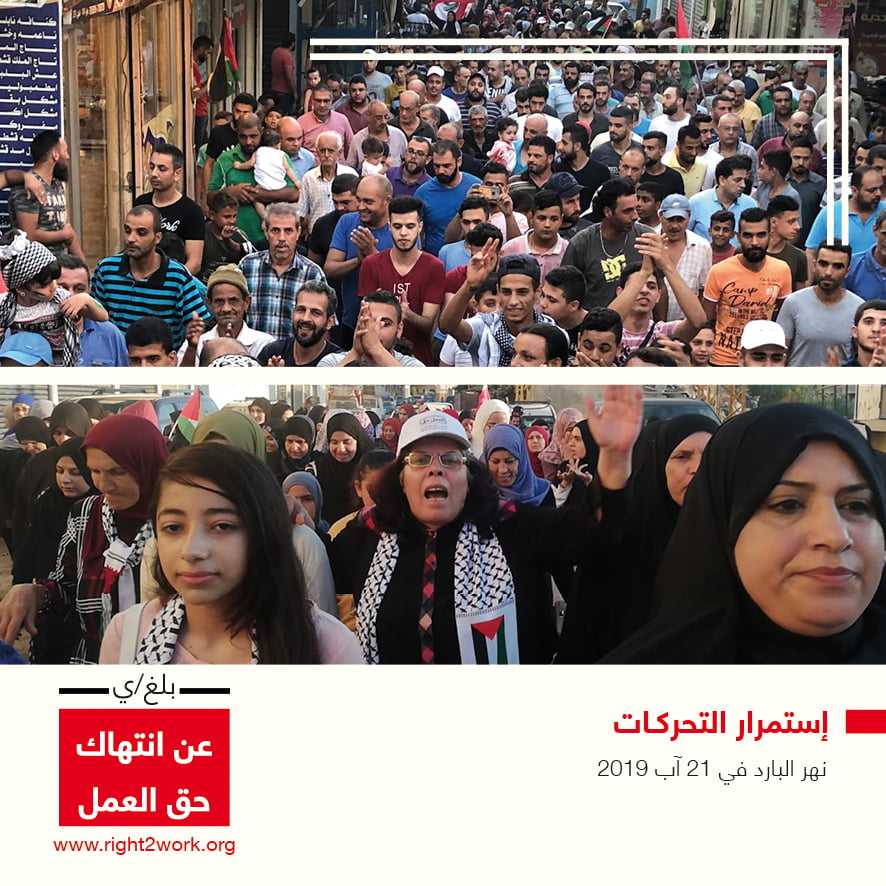
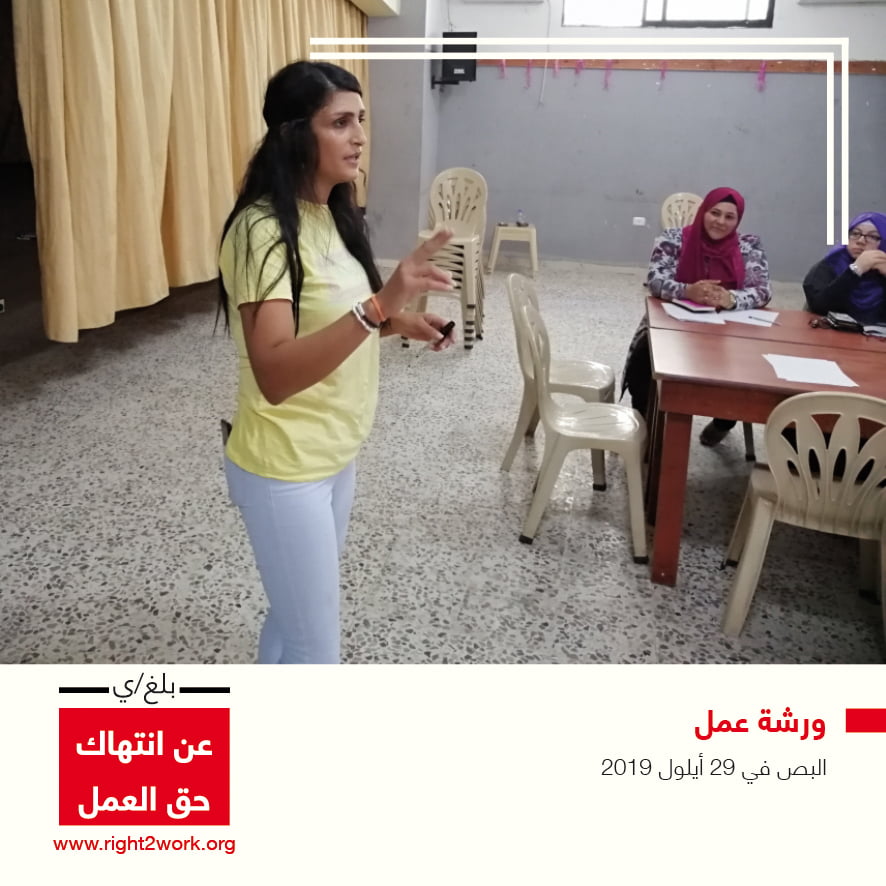
- Demonstrations, marches, workshops, seminars
- University engagement and student involvement
- Round tables with embassies and decision makers
Media and Education
- Issuing educational and media materials
- Posters, brochures, films, studies and research
- Interactive theaters and youth actions
- Focus groups across all regions in Lebanon
Lobbying and Advocacy
- Local and international lobby meetings
- Engagement with Palestinian and Lebanese officials
- International bodies and organizations
- Coordination with other campaigns
Youth Engagement
- Target Lebanese and Palestinian youth
- Schools, universities and institutes
- Youth mobilization and support
- Joint Palestinian-Lebanese actions
Specific Objectives
Legislative Reform
- Amend and/or change discriminatory laws and procedures in the Lebanese labor law
- Reform the laws of the liberal professions unions
Parliamentary Action
- Submit projects to the Lebanese Parliament
- Abolish discriminatory work laws and procedures toward Palestinians
Official Recognition
- Adopt the issue in Lebanese official discourse
- Include the right to work issue in Parliament discussions
Public Mobilization
- Mobilize Palestinian and Lebanese public opinion
Support efforts on the right to work for Palestinian refugees in Lebanon
Campaign Strategy
Strategic Approach
To achieve its vision and objectives, the RtWC follows comprehensive strategies across multiple levels.
Mobilization
Of national, local and public communities and opinion, as well as policy makers at national, regional and international levels.
Networking and Coordination
With civil society, community and national initiatives, campaigns and coalitions.
Legislative Change
Changing legislations through drafting and submitting projects to Lebanese decision makers and legislative bodies.
Media Usage
Local, regional and international media – visual, printed, audio, and social media platforms.
International Mechanisms
Usage of Arabic, regional and international mechanisms and frameworks.
Research and Education
Produce educational materials, documentaries, research on Palestinian economic contributions and discrimination.
The Legal Status Of Palestinian Refugees In Lebanon
Lebanese legislation still does not clearly define Palestinian refugee’s (PR) legal status. PR are administratively divided into three categories: (a) Refugees registered with the Ministry of Interior and Municipalities (MIM), within the Department of Political Affairs and Refugees (DPAR) and with the Relief and Works Agency for Palestine Refugees in the Near East (UNRWA); (b) Refugees Registered in the (DPAR) but not registered with UNRWA; and (c) Refugees not registered with either (Non IDs). A fourth category was added because of the Syrian Civil War which forced PR to flee from Syria to Lebanon – Palestinian Refugees from Syria (PRS).
The four categories of PR suffer from all forms of discrimination. The PRS legal status has not defined and there is no obligatory legal framework which ensures their protection by the government or UNRWA. Consequently, they are subject to numerous violations of their civil and socio-economic rights.
Administrative Categories
- Category A: Registered with MIM/DPAR and UNRWA
- Category B: Registered with DPAR only, not with UNRWA
- Category C: Not registered with either (Non IDs)
- Category D: Palestinian Refugees from Syria (PRS)
Lebanese-Palestinian Right To Work Campaign Coalition
Despite Labour Law Amendment 129/2010 and Social Security Law Amendment 128/2010, significant barriers persist in Palestinian refugees’ access to work and fair employment conditions.
Current Legal Barriers
Liberal Professions Exclusion
Excluded from all liberal jobs organized by unions and syndicates such as engineering, law, medicine, nursing, etc. Palestinians continue to be deprived of syndicate affiliation despite legal amendments.
Work Permit Requirements
Palestinians irregular workers continued to be considered and treated as foreigners. Obligation to obtain work permit and employer guarantee remains burdensome.
Social Security Discrimination
While Palestinians can enroll in NSSF, they pay full coverage fees (23.5% of salary) but benefit only from end of service indemnity (8.5%), excluding illness, maternity, and family benefits.
Syndicate Restrictions
Professional syndicates maintain discriminatory practices despite legal amendments:
- Lawyers: Must have Lebanese citizenship for at least 10 years
- Doctors: Subject to reciprocity laws (COM Decree No. 1659 of 1979)
- Pharmacists and Engineers: Same reciprocity restrictions apply
Government Policy Impact
The fear and anxiety of Palestinian resettlement in Lebanon greatly affected the Lebanese perspective towards their uninvited Palestinian “guests”. Under the pretext of preserving the Palestinian national right to return to their homeland, the Lebanese government adopted a policy that actively denies Palestinians from all their human rights (civil, economic, social…).
Update Information on Access To Work
2005 Labor Ministry Memorandum
On June 2005, Lebanese Minister of Labor issued memorandum No. 67/1 allowing Palestinian refugees to obtain work permits for some irregular jobs that are not organized by liberal Unions and Syndicates and that were previously difficult to obtain.
However, the memorandum barred them from practicing more than 30 professions. Few Palestinians have benefited from the 2005 labour ministerial decree. While this was a positive development, it has not had a tangible impact and improvement on Palestinian employability and socio-economic situation.
2010 Parliamentary Amendments
In August 2010, the Lebanese Parliament amended labor and social security laws to facilitate and ease access of Palestinians to work. The memorandum of the Lebanese parliament was considered by the majority of Palestinians as a minor positive step, which is not enough to improve their socio-economic conditions and employability.
Current Implementation Status
Limited Impact Work permits are not perceived as necessary and are not required by most occupations performed by Palestinian refugees.
Low UptakeFewer than 2% of Palestinian refugees have acquired a work permit since 2010. Most are engaged in irregular occupations that do not need work permits.
Awareness GapMany remain unaware of the procedures for regularizing their status. Figures on application refusals are missing from official records.
Implementation Challenges
Despite amendments to Article 59 of Labour Law 129/2010 and Article 9 of Social Security Law 128/2010, the Council of Ministers has not published any amendment decisions. Thus the implementation of these laws remains subject to decisions by consecutive labour ministers.